
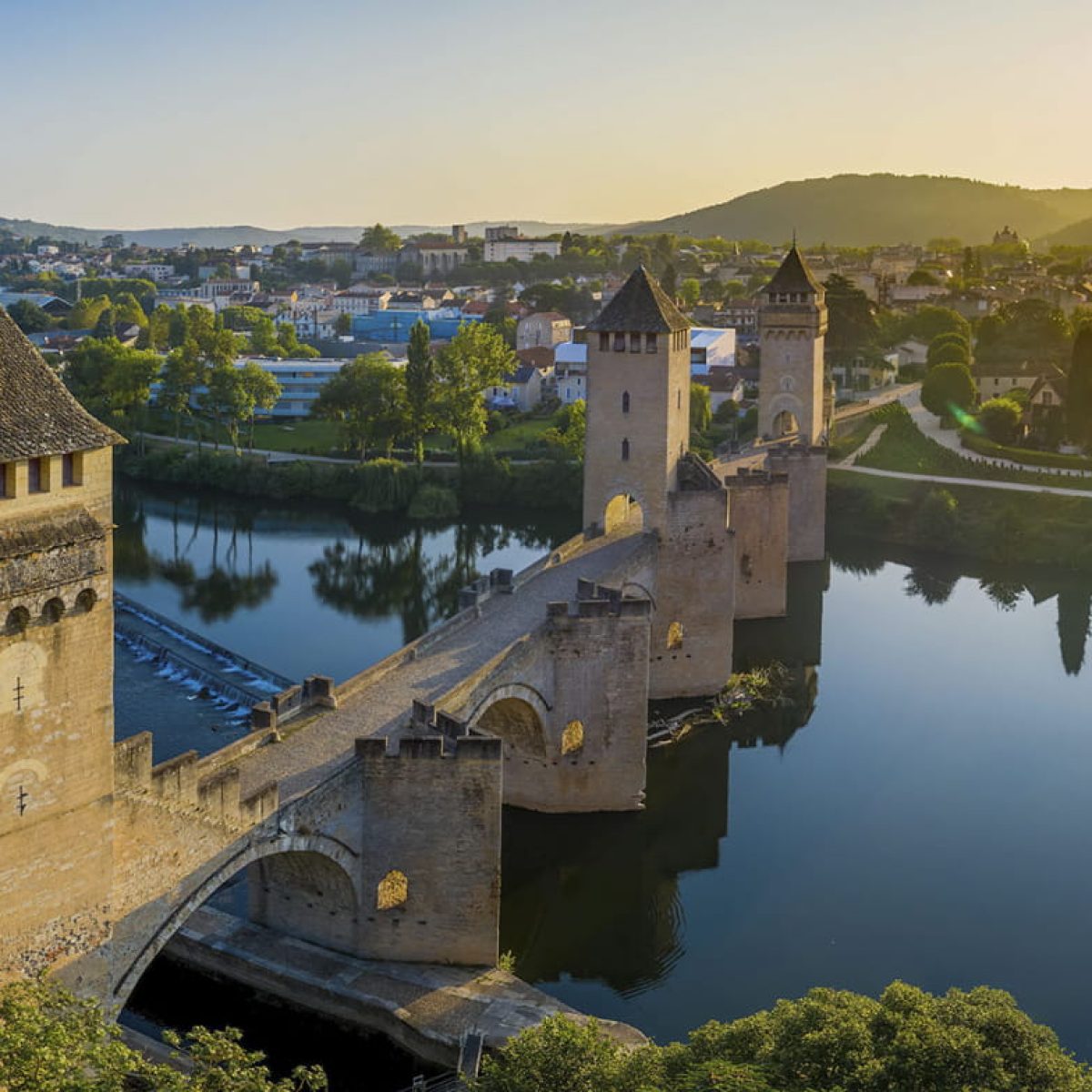
Sanctuary towns in France form one of the richest spiritual landscapes in Europe. Every year, thousands of pilgrims and travelers from around the world come to these destinations searching for prayer, a pilgrimage in France, a spiritual retreat in France, or simply a sacred place to slow down and rediscover meaning. These sanctuaries are not only religious monuments; they form a living network built around 19 destinations recognized for their spiritual identity, historic depth, and cultural significance.
The phrase “sanctuary towns” points to something very specific. It doesn’t refer only to a single basilica or a remarkable church. It describes an entire territory shaped by the presence of a sanctuary, a saint, a Marian devotion, or a founding spiritual event. In Lourdes, Lisieux, Rocamadour, Mont-Saint-Michel, or Le Puy-en-Velay, the experience goes far beyond architecture. You enter a rhythm: walking, praying, listening, and allowing God to work in you.
To understand the richness of sanctuaries in France is to discover a kind of inner geography. From the north to the south, from the Atlantic to the Alps, these places offer striking landscapes—mountains, sea, medieval towns, volcanic plateaus—alongside a spiritual depth that draws both committed believers and sincere seekers. This unique link between spiritual tourism in France and lived faith is exactly what makes these destinations so powerful.
If you want to understand and plan a search around the best pilgrimage sites in France, it helps to clarify what a sanctuary truly is. In the Christian tradition, a sanctuary is a place officially recognized for welcoming pilgrims and for carrying a specific spiritual message. That message may be tied to a Marian apparition, the life of a saint, the presence of relics, a decisive historical moment, or a long tradition of graces and healings.
Unlike a typical parish church, a sanctuary is structured to receive visitors who sometimes travel very far. It offers organized prayer times, regular liturgical celebrations, processions, retreats, themed sessions, and often spiritual guidance. This is why people speak of pilgrimage destinations in France: the place is not chosen only for comfort or beauty, but for what it represents.
It is also helpful to distinguish terms that are often confused. A cathedral is the principal church of a diocese and the seat of the bishop. A basilica is a church granted an honorary title by Rome because of its spiritual, historical, or pastoral importance. A chapel is a smaller place of worship, sometimes integrated into a larger shrine complex. A sanctuary, however, is defined by its mission of welcoming pilgrims and by the intensity of prayer and devotion lived there.
This distinction is not merely technical—it shapes the traveler’s intention. You do not come to a sanctuary town as you would visit a museum. You come to live a Catholic pilgrimage in France, to entrust a prayer, give thanks, discern a decision, ask for a grace, or simply breathe again in a sacred space.
The network known as the Sanctuary Towns in France brings together 19 emblematic destinations that shape the landscape of religious tourism in France:
Alençon, Ars-sur-Formans, Brive-la-Gaillarde, Cahors, Cotignac, La Salette, Lalouvesc, Mont-Saint-Michel, Le Puy-en-Velay, Les Saintes-Maries-de-la-Mer, Lisieux, Lourdes, Nevers, Paray-le-Monial, Rocamadour, Sainte-Anne-d’Auray, Souvigny, Vendeville, and Vézelay.
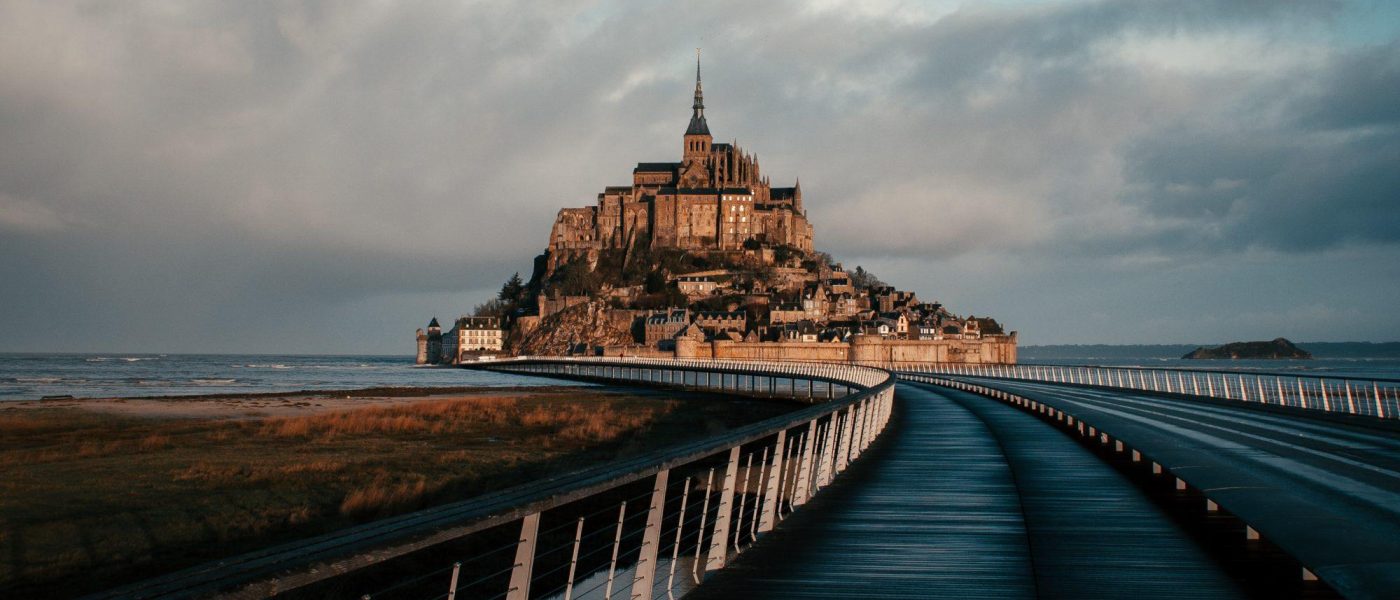
Each of these sanctuary towns has a unique spiritual identity. Lourdes is known worldwide for Marian apparitions and for Saint Bernadette. Lisieux draws pilgrims inspired by the spirituality of Saint Thérèse of the Child Jesus (Saint Thérèse of Lisieux). Ars-sur-Formans is inseparable from the Curé of Ars, Saint John Vianney, and the power of confession and reconciliation. Paray-le-Monial is tied to devotion to the Sacred Heart. Mont-Saint-Michel combines breathtaking vertical beauty with the memory of Saint Michael the Archangel.
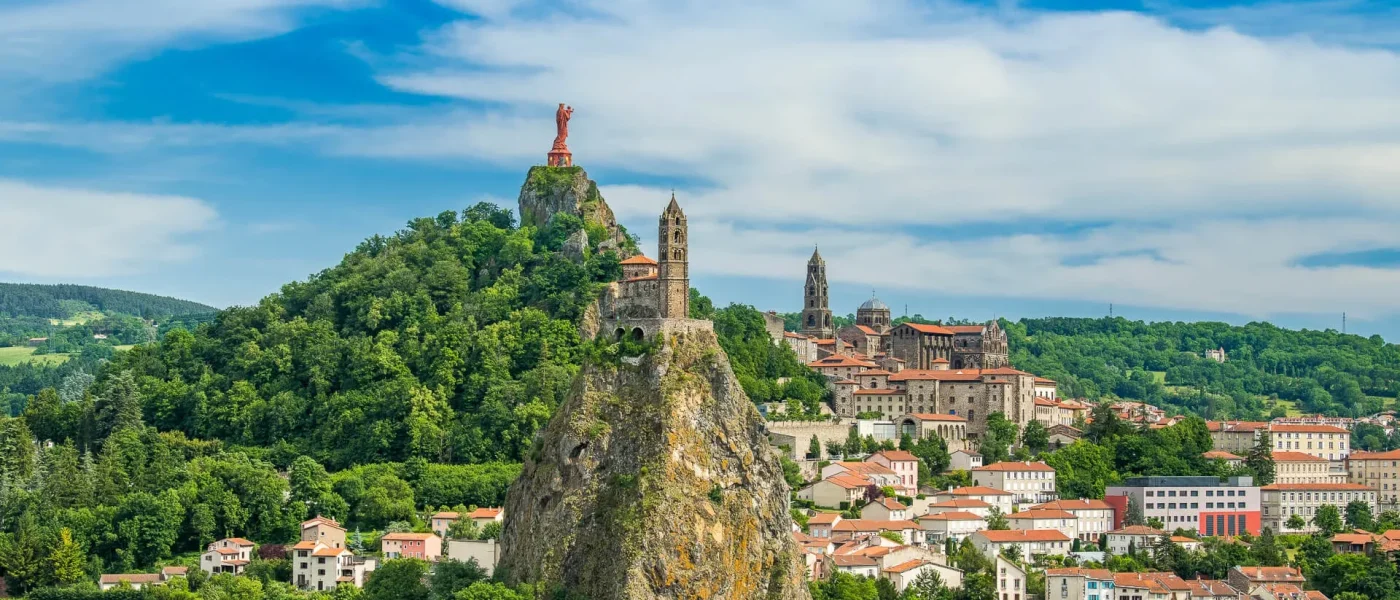
Rocamadour, clinging to its cliff, embodies an ancient Marian tradition where the Black Madonna has drawn kings, pilgrims, and travelers for centuries. Le Puy-en-Velay is one of the historic starting points for the Camino de Santiago (Way of St. James), making it a crossroads between physical walking and inner journey. La Salette, a mountain sanctuary, offers a more stripped-down experience marked by silence, repentance, and conversion.
This list should not be seen as an inventory. It is a spiritual map. Depending on the pilgrim’s intention—Marian prayer, silent retreat, healing journey, theological depth, or cultural discovery—some destinations will be more suitable than others. The goal is not to “check” the greatest number of places, but to choose the ones that match a real inner need.
The real question is not only “where to go,” but “why go.” Sanctuaries in France respond to deeply human needs: the search for meaning, the need for silence, the desire for inner peace, and the longing either to ask or to give thanks. In a world shaped by constant acceleration, sanctuary towns offer a different rhythm—space where time slows down.
To visit a sanctuary town is to enter a movement of spiritual renewal. The word renewal is not just poetic; it points to returning to the source, to what grounds life. Many sanctuaries offer spiritual retreats, formation sessions, reflection weekends, conferences, processions, and major celebrations linked to saints and Marian feasts. These aren’t optional extras—they structure the experience and help the pilgrim receive more than a superficial visit.
Prayer holds a central place. The silence of churches, the regular rhythm of liturgy, and the possibility of confession, adoration, or meditation create a setting that supports inner listening. Even non-practicing visitors often sense a distinct atmosphere: a blend of reverence, beauty, and peace.
Pilgrimage is also communal. People walk together, sing together, share meals, and speak honestly about what they carry. Sanctuaries become places of encounter where pilgrims realize they are not alone in their questions. This human dimension often strengthens the spiritual impact of the journey.
One of the most striking features of sanctuary towns in France is their connection to pilgrimage routes. The Way of St. James (Camino de Santiago) remains the major reference point. Hundreds of thousands of walkers use the great French routes each year—especially the Le Puy route (Via Podiensis), the Vézelay route (Via Lemovicensis), the Tours route, and the Arles route—on their way toward Santiago de Compostela.
Le Puy-en-Velay holds a strategic place here. As a sanctuary town and historic departure point, it symbolizes the link between a shrine and a route. Walking becomes a metaphor for the inner path. The pilgrim learns patience, endurance, and solidarity—virtues that rarely grow without time and movement.
Other itineraries also shape this spiritual map: routes toward Mont-Saint-Michel, local paths connecting sanctuaries, and mountain approaches toward La Salette or Lalouvesc. These marked trails aren’t simple sightseeing loops; they invite progressive transformation. To walk is to accept effort, simplicity, and encounter.
In this sense, sanctuary towns are not static destinations. They are anchor points in a larger movement. Many people arrive after walking—and leave changed, with a renewed perspective on life.
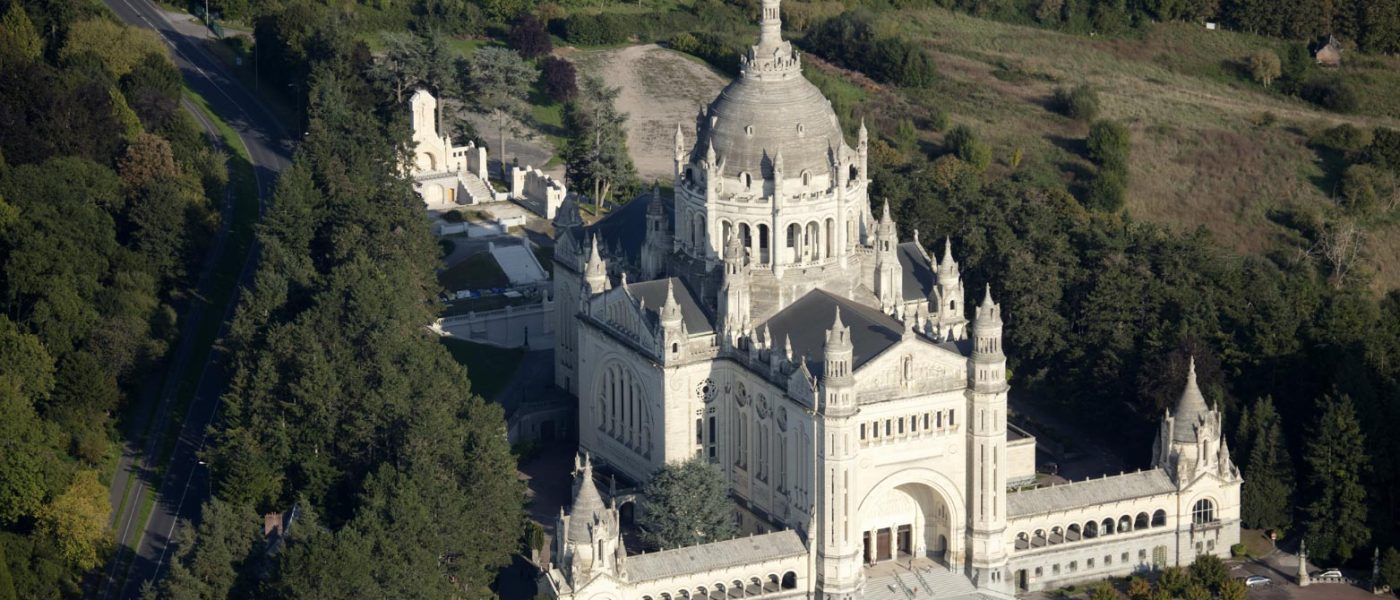
What truly sets pilgrimage towns in France apart is their ability to unite spirituality and culture. Romanesque and Gothic architecture, basilicas, cathedrals, cliff chapels, contemporary stained glass, and precious reliquaries testify to an exceptional historical continuity.
Sacred art—ancient and modern—deepens the experience. Stained glass, sculpture, Stations of the Cross, and liturgical craftsmanship express faith through beauty. Even for visitors unfamiliar with Christianity, the architectural and artistic dimension becomes a doorway into emotion, reflection, and questions that matter.
A strong regional identity adds another layer. Each sanctuary town belongs to a terroir: local cuisine, specialties, agriculture, and landscapes. This dimension is not secondary. It shapes the overall experience of the journey and reminds us that Christian spirituality is not abstract; it is rooted in real places, real communities, and embodied culture.
Sanctuary towns in France attract pilgrims because they are linked to spiritual figures who shaped Christian history. These places did not become pilgrimage sites in France by accident. They carry the memory of saints, mystics, kings, conversions, and radical testimonies of faith. Understanding these figures is essential to understanding the spiritual DNA of each sanctuary.
At the center of Christian faith is Jesus Christ, yet French sanctuaries also give a major place to the Virgin Mary, present through many devotions: Lourdes, Rocamadour, Cotignac, La Salette, Le Puy-en-Velay, Chartres, and Les Saintes-Maries-de-la-Mer. Marian shrines in France are a structural reality of spiritual tourism. Mary is honored as mother, intercessor, and guide into trust. This Marian dimension explains much of the international influence of these destinations.
In Lisieux and Alençon, Saint Thérèse of Lisieux draws pilgrims worldwide. Her “Little Way” offers an accessible spirituality of trust and love through ordinary faithfulness. In Ars-sur-Formans, the Curé of Ars—Saint John Vianney—embodies mercy and priestly fidelity. Paray-le-Monial is inseparable from Saint Margaret Mary Alacoque and the devotion to the Sacred Heart.
In Lourdes, Saint Bernadette shows how humility can become universal. Nevers preserves her body and extends the memory of her hidden service. At Mont-Saint-Michel, Saint Michael the Archangel symbolizes protection and spiritual battle. At Lalouvesc, Saint John Francis Regis, the “Walker of God,” reflects a faith expressed through closeness to the poor.
These figures shape the spiritual orientation of each sanctuary town. You do not come to Ars the same way you come to Lourdes. You do not come to La Salette the same way you come to Rocamadour. Each destination offers a specific spiritual accent: conversion, reparation, trust, adoration, silence, mercy. This diversity is part of what makes a pilgrimage in France so rich.
Sanctuaries in France have often been visited by kings, political figures, artists, and well-known converts. This historical layer strengthens their importance within religious travel in France.
In Rocamadour, Henry II Plantagenet, Saint Louis, and other rulers came to pray. In Cotignac, Louis XIII and Anne of Austria asked for the grace of an heir, leading to the birth of Louis XIV. These royal pilgrimages anchored certain sanctuaries in national memory.
Striking conversions also belong to this living heritage. French composer Francis Poulenc testified to a powerful spiritual experience at Rocamadour. Maurice Caillet, a former Freemason, described his conversion after a pilgrimage to Lourdes. These are not mere anecdotes—they show that sanctuaries continue to shape lives in modern times.
Relics preserved in reliquaries and shrines strengthen this link with tradition. Relics are not curiosities; they point to continuity across centuries. In some places, sanctuaries also preserve archives referred to as “books of miracles,” recording testimonies of graces received.
The word “miracle” often generates fascination or skepticism. In the context of sanctuary towns in France, it must be approached seriously. Christian tradition understands a miracle as a sign—not an end in itself—pointing to God’s power and freedom.
The Catholic Church shows great prudence in officially recognizing miracles. In Lourdes, for example, a medical bureau examines cases of unexplained healing. Investigations may take years and involve physicians and theologians. Only a small number of healings are formally authenticated after rigorous review.
Other sanctuaries preserve older accounts in their archives. The Book of Miracles of Rocamadour, written in the 12th century, is a precious witness to medieval faith. At La Salette, Souvigny, and elsewhere, archives show how pilgrims have always expressed their prayers of request and thanksgiving.
For the modern pilgrim, the essential point is not to chase spectacle, but to live an authentic inner experience. The ex-votos covering the walls of some sanctuaries testify to trust, gratitude, and a lived dialogue between a person and God.
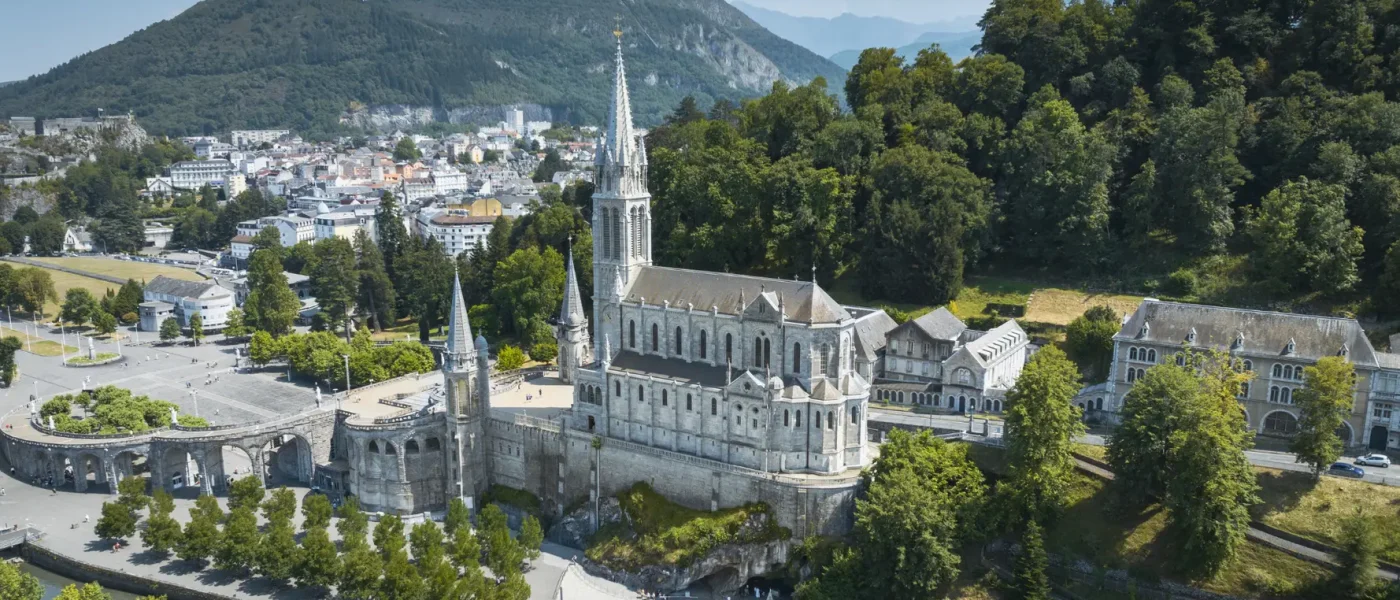
With so many pilgrimage destinations in France, choosing can feel overwhelming. Yet clarity comes from one simple question: what is your intention?
Are you looking for a Marian shrine in France? Lourdes, Rocamadour, Cotignac, and La Salette naturally emerge. Do you want to deepen the theme of mercy? Ars-sur-Formans and Paray-le-Monial offer strong coherence. Do you desire silence and altitude? La Salette or Lalouvesc may fit. Are you drawn to walking and pilgrimage routes in France? Le Puy-en-Velay is an ideal anchor point.
Duration matters too. A 3–5 day format allows deep immersion in one sanctuary. A 7–9 day itinerary can connect two or three coherent destinations. A 12–15 day circuit can explore a full theme: Marian France, French saints, Camino routes, or mountain sanctuaries.
The secret of a fruitful pilgrimage is balance. Too many stops in a row can dilute the experience; too little time leaves no space for interior prayer. Sanctuary towns in France require a rhythm that protects contemplation, liturgy, and real encounter.
It is important to emphasize that sanctuaries in France are not only for practicing Catholics. Many people—sometimes far from faith—enter a sanctuary to recover inner silence, peace, or direction.
Jesus says in the Gospel: “Come away by yourselves to a deserted place and rest a while.” This invitation resonates strongly in sanctuary towns. They offer a setting where you can step back from noise, reflect on your choices, discern a vocation, or lay down a burden.
Renewal can come through nature, walking, contemplation of a panorama, participation in a vigil or a procession, or simply being present in silence before an altar, a stained-glass window, or a statue.
Sanctuary towns in France are not just destinations for religious tourism. They are a living network where faith, history, culture, and humanity meet. Lourdes, Lisieux, Rocamadour, Ars, Paray-le-Monial, Mont-Saint-Michel, Le Puy-en-Velay, La Salette, and the other sanctuary towns form a unique spiritual mosaic.
To come to a sanctuary town is to enter a journey. It is to recognize a need—for pause, meaning, prayer, conversion, or gratitude. It is to walk toward a place chosen to help you experience a presence greater than yourself.
In a world overwhelmed by information and constant stimulation, these sanctuaries remind us that silence, prayer, and beauty still have transforming power. The true pilgrimage may begin with one simple decision: to slow down and listen.
If this article helped you better understand sanctuary towns in France, you may want to continue with these related resources:
These articles will help you refine your pilgrimage in France and build a coherent, fruitful spiritual journey.
Some of the best-known sanctuary towns in France include Lourdes, Lisieux, Mont-Saint-Michel, Rocamadour, Paray-le-Monial, Ars-sur-Formans, Le Puy-en-Velay, and La Salette, along with other destinations in the national sanctuary network.
A sanctuary is a recognized pilgrimage site dedicated to welcoming pilgrims and centered on a specific devotion or spiritual message. A basilica is an honorary title granted to a church for its importance.
A 3–5 day trip works well for one sanctuary town. For a multi-stop pilgrimage itinerary, 7–15 days is more balanced and spiritually fruitful.
No. Sanctuary towns welcome believers, seekers, and visitors interested in cultural and spiritual heritage.
Lourdes is the most globally known, but Rocamadour, Cotignac, and La Salette are also major Marian shrines—each with a distinct identity and spiritual focus.