
There are four main Camino routes in France: the Le Puy route (Via Podiensis), the Tours route (Via Turonensis), the Vézelay route (Via Lemovicensis) and the Arles route (Via Tolosana). All four were already described in the twelfth century in the Pilgrim’s Guide of the Codex Calixtinus.
Three of them meet at Ostabat before crossing the Pyrenees at Saint-Jean-Pied-de-Port, while the Arles route enters Spain through the Somport pass.
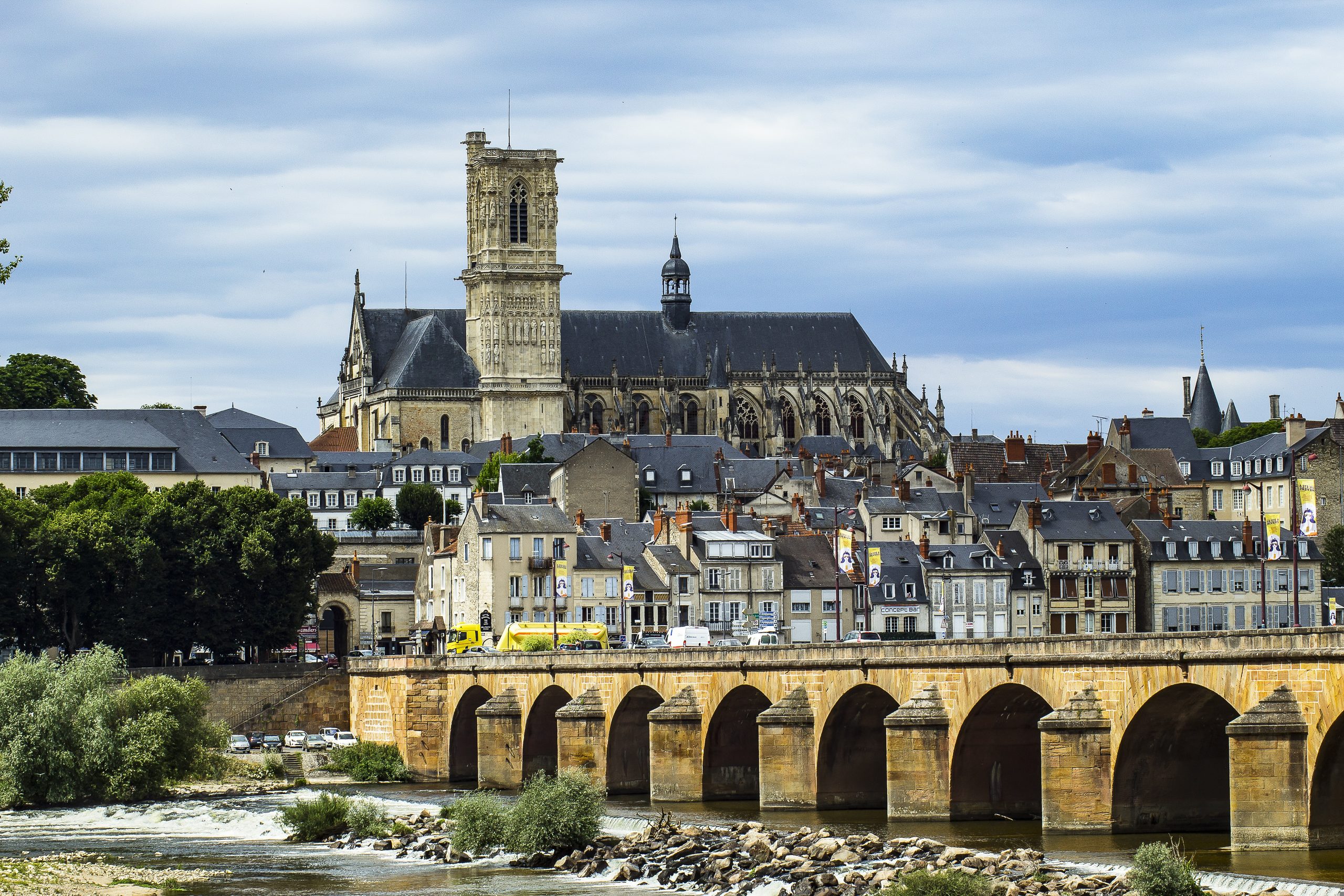
For travel agencies and tour operators, the Camino routes in France offer a powerful theme for group travel: medieval heritage, Romanesque art, landscapes and a spiritual dimension shared by Catholics, Protestants and many travelers without a religious practice. This guide explains the four routes and how a group can experience them.
This article is part of our complete guide to high-end Catholic journeys in France.
The four Camino routes in France, described as early as the twelfth century
The pilgrimage to the tomb of the apostle Saint James the Greater in Santiago de Compostela, in Galicia, developed from the Middle Ages onwards.
In the twelfth century, the fifth book of the Codex Calixtinus, known as the Pilgrim’s Guide, described four routes crossing France toward Spain. It listed the stages, the sanctuaries to visit along the way and practical advice for pilgrims.
The symbol of the pilgrimage is the scallop shell, found on waymarks, on church façades and on the bags of pilgrims. The pilgrim’s credential, a booklet stamped at each stage, is still used today.
These four routes are not single paths but networks of roads that linked the great sanctuaries of the time. Today, they are waymarked long-distance trails, used by walkers from all over the world.
In 1998, the Routes of Santiago de Compostela in France were inscribed on the UNESCO World Heritage List, through a selection of monuments and sections of the paths.
The Le Puy route (Via Podiensis), the most popular Camino route in France
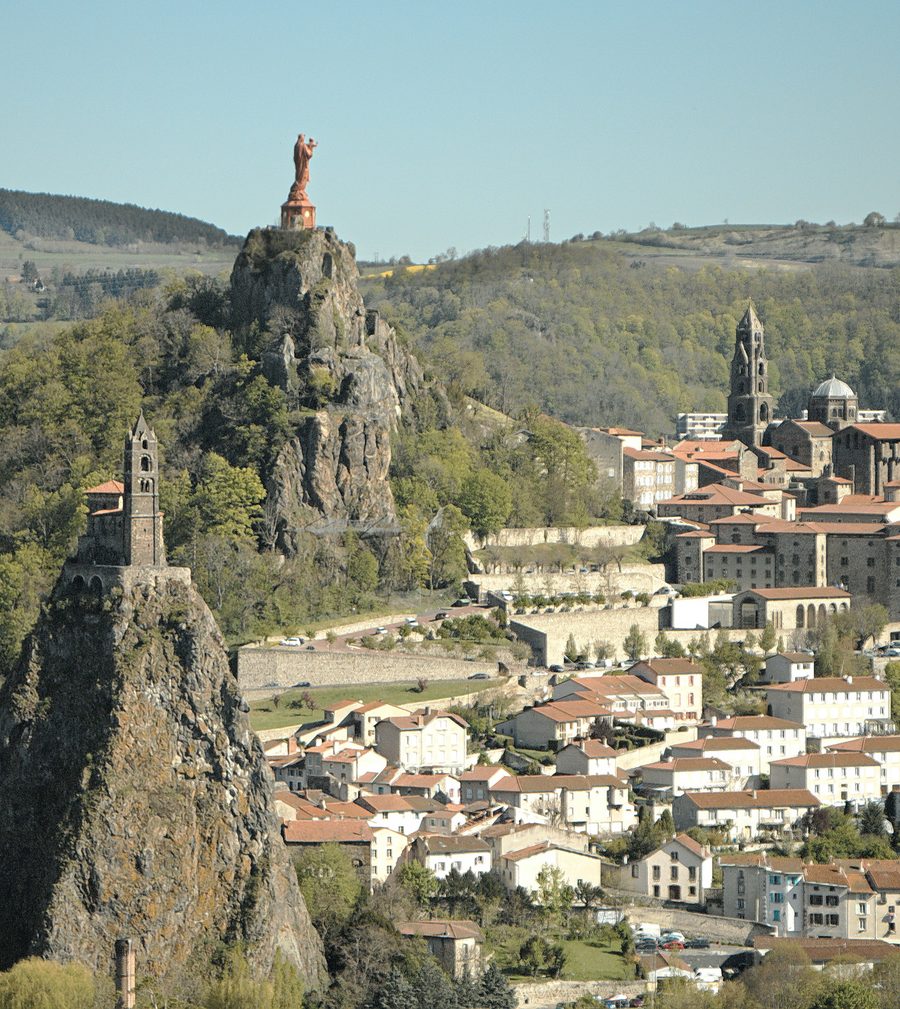
The Le Puy route, or Via Podiensis, starts at the Cathedral of Notre-Dame du Puy, in Le Puy-en-Velay, in the Massif Central. It is today the most popular Camino route in France and the one that concentrates the most famous sites.
- Le Puy-en-Velay: a cathedral perched above a town of volcanic peaks, the traditional starting point with the pilgrims’ blessing.
- The Aubrac plateau: vast open landscapes, one of the most striking sections of the route.
- Conques: a medieval village around the abbey church of Sainte-Foy, famous for its sculpted Last Judgment tympanum and its treasury.
- Figeac and Cahors: historic towns on the Lot, with the fortified Valentré bridge at Cahors.
- Moissac: the abbey of Saint-Pierre, whose Romanesque cloister and tympanum are among the masterpieces of medieval art.
- Gascony and the Basque Country: gentle hills, then Ostabat and Saint-Jean-Pied-de-Port at the foot of the Pyrenees.
For a group, the Via Podiensis is the easiest route to present: it combines outstanding heritage, varied landscapes and well-known names.
The Tours route (Via Turonensis), from Paris to the Atlantic coast
The Tours route, or Via Turonensis, crosses western France. Pilgrims traditionally set off from Paris, where the Tour Saint-Jacques and the Rue Saint-Jacques still recall the pilgrimage, and headed south via Orléans and Tours.
- Tours: the city of Saint Martin, one of the great pilgrimage figures of the Middle Ages.
- Poitiers: the church of Notre-Dame-la-Grande and its sculpted Romanesque façade.
- Saintes: the basilica of Saint-Eutrope, a major stage of the pilgrimage.
- Bordeaux: the basilica of Saint-Seurin and the other monuments linked to the route.
- The Landes: long stretches through forest, before joining the other routes at Ostabat.
This route is interesting for groups who arrive in Paris and wish to combine the capital, the Loire Valley and the Atlantic coast.
The Vézelay route (Via Lemovicensis), quieter and more rural
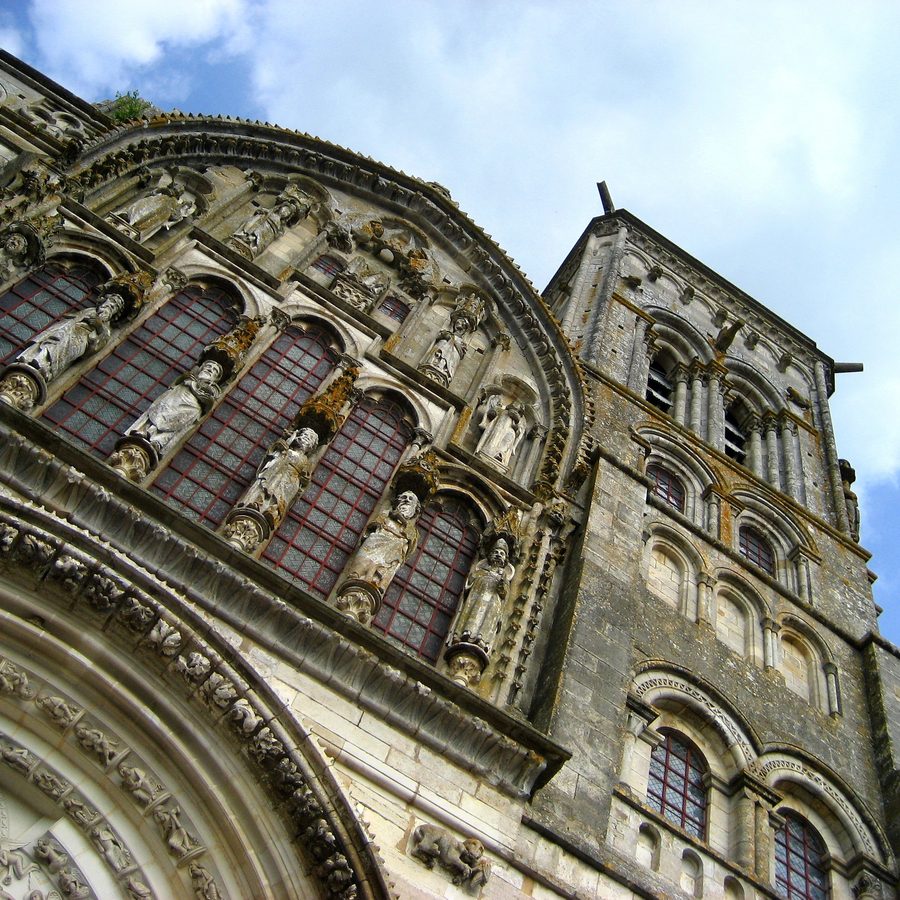
The Vézelay route, or Via Lemovicensis, starts at the Basilica of Sainte-Marie-Madeleine in Vézelay, in Burgundy, a hilltop sanctuary and a masterpiece of Romanesque art. It then crosses central France.
- Vézelay: the basilica, its tympanum and its luminous nave, a starting point steeped in the memory of the Middle Ages.
- Two branches: one via Bourges, the other via Nevers, which meet further south.
- Saint-Léonard-de-Noblat and Limoges: stages in the Limousin, a region of Romanesque churches.
- Périgueux: the Cathedral of Saint-Front and its domes.
- Gascony: the route crosses the south-west before reaching Ostabat.
The Vézelay route is less frequented than the Le Puy route. It suits groups looking for a quieter, more rural itinerary, or groups already visiting Burgundy.
The Arles route (Via Tolosana), the southern road to the Somport Pass
The Arles route, or Via Tolosana, is the southern route. It starts in Arles, in Provence, and crosses the south of France from east to west.
- Arles: the church of Saint-Trophime and its cloister, and the ancient necropolis of the Alyscamps.
- Saint-Gilles: an abbey church with a remarkable Romanesque façade.
- Saint-Guilhem-le-Désert: a village and abbey nestled in a gorge of the Hérault.
- Toulouse: the Basilica of Saint-Sernin, one of the largest Romanesque churches in Europe.
- Auch and Oloron-Sainte-Marie: stages in Gascony and Béarn, before the Somport pass.
Unlike the other three, the Arles route does not pass through Ostabat. It crosses the Pyrenees at the Somport pass and continues into Spain on the Aragonese route.
The four routes at a glance
| Route | Latin name | Starting point | Key stages | Crossing into Spain |
|---|---|---|---|---|
| Le Puy route | Via Podiensis | Le Puy-en-Velay | Aubrac, Conques, Cahors, Moissac | Ostabat, then Saint-Jean-Pied-de-Port |
| Tours route | Via Turonensis | Paris / Tours | Orléans, Tours, Poitiers, Saintes, Bordeaux | Ostabat, then Saint-Jean-Pied-de-Port |
| Vézelay route | Via Lemovicensis | Vézelay | Bourges or Nevers, Limoges, Périgueux | Ostabat, then Saint-Jean-Pied-de-Port |
| Arles route | Via Tolosana | Arles | Saint-Gilles, Saint-Guilhem, Toulouse, Auch | Somport pass |
Experiencing the Camino as a group: partial walking or coach stages
Walking a whole Camino route in France takes several weeks, which is rarely compatible with a group trip. Groups therefore experience the Camino in two main ways, which can be combined.
Coach stages
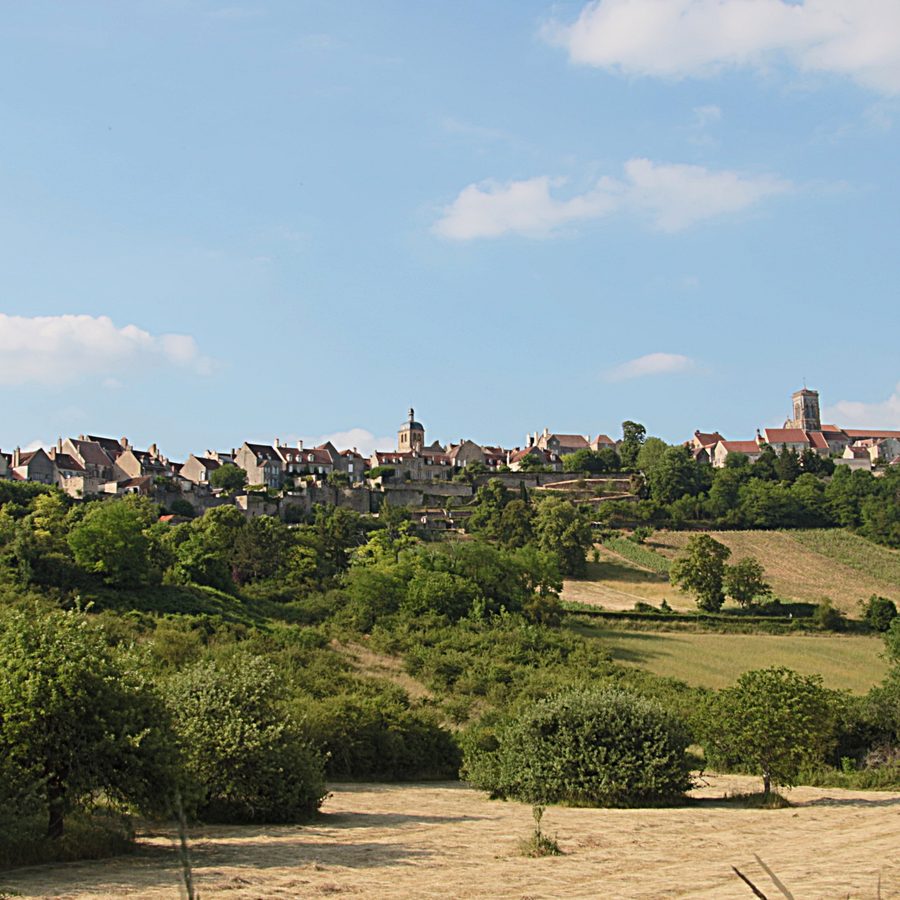
The coach links the great sites of a route in a few days: the starting cathedral, the major abbeys, the historic towns and the Pyrenean crossing points. This format allows a group to understand the logic of the pilgrimage and to discover its heritage without physical constraints. It suits seniors, parishes and cultural groups.
Partial walking
Many groups want to experience the Camino on foot, even briefly. A walk of a few hours on a chosen section, between two villages, with the coach waiting at the end, gives participants a real taste of the pilgrimage.
The most scenic sections, such as the Aubrac plateau or the approach to Conques, lend themselves well to this format. The walking level must be adapted to the group, and luggage should travel by coach.
Spiritual and practical elements
- The credential: participants can carry a pilgrim’s credential and have it stamped at each stage.
- Blessings and celebrations: the pilgrims’ blessing in Le Puy or a Mass in a great abbey church give the trip its spiritual dimension, subject to requests made in advance.
- The Compostela certificate: it is issued in Santiago to pilgrims who have walked at least the last hundred kilometers in Spain. A group trip in France is a different experience, focused on the French heritage of the Camino.
- Season: spring and early autumn offer the best conditions for walking; the Aubrac and the Pyrenees can be cold outside summer.
The Great Saints of France · 14 days · in the footsteps of the saints who shaped France.
The Sacred Wonders of France · 15 days · cathedrals, abbeys and masterpieces of sacred art.
For the level of service, discover our exceptional addresses: Hotels, Gastronomy and Art of Living.
For travel agencies: choosing the right Camino route
The Camino is a theme with strong appeal, well beyond practicing believers: heritage, nature, personal challenge and a sense of history. For an agency, the key is to choose the right route and the right balance between coach and walking according to the group’s profile.
- Choose one route rather than mixing several: the Le Puy route is the most complete for a first trip.
- Adapt the walking to the group’s physical condition and keep it optional.
- Combine the Camino with other sanctuaries, such as Lourdes, located a short distance from the Pyrenean end of the routes.
EXOD Agency, a receptive agency specialized in Christian travel in France, does not offer long-distance walking. It can, however, include stages of the Way, such as Le Puy-en-Velay, in a tailor-made journey by coach, or point you to its published tours, such as “The Great Saints of France“.
It works exclusively with agencies and tour operators, 100% in white label, for groups of 10 people or more, and answers quote requests within 48 hours.
FAQ: the Camino routes in France
What are the four Camino routes in France?
The four main Camino routes in France are the Le Puy route (Via Podiensis), the Tours route (Via Turonensis), the Vézelay route (Via Lemovicensis) and the Arles route (Via Tolosana). They were described in the twelfth century in the Pilgrim’s Guide of the Codex Calixtinus.
Which Camino route in France is the most popular?
The Le Puy route, or Via Podiensis, is the most popular Camino route in France. It passes through Aubrac, Conques, Cahors and Moissac before reaching Saint-Jean-Pied-de-Port.
Where do the French Camino routes meet?
The Le Puy, Tours and Vézelay routes meet at Ostabat, in the Basque Country, before Saint-Jean-Pied-de-Port and the crossing of the Pyrenees. The Arles route crosses the mountains separately, at the Somport pass.
Are the Camino routes in France a UNESCO World Heritage site?
Yes. The Routes of Santiago de Compostela in France were inscribed on the UNESCO World Heritage List in 1998, through a selection of monuments and path sections.
Can a group experience the Camino without walking the whole route?
Yes. Most groups combine coach stages between the great sites with short walks on selected sections. This format allows participants to experience the pilgrimage without the physical demands of several weeks of walking.
What to remember about the Camino routes in France
The Camino routes in France, described in the twelfth century and still waymarked today, offer groups a unique combination of faith, heritage and landscapes. The Le Puy route remains the most accessible for a first discovery, while the Tours, Vézelay and Arles routes offer quieter alternatives.
By combining coach stages and short walks, a group can experience the spirit of the pilgrimage in a single week.