
The U.S. religious travel market is large, growing and increasingly demanding, and it is moving toward smaller groups, tailor-made programs and meaningful content. For agencies and tour operators, France offers a high-end alternative to the classic destinations, particularly for Protestant and evangelical clients.
We wrote this article for travel agencies and tour operators selling to the American market. It sets out the figures, the main client segments and what they expect from a journey to France. It reflects what we see at EXOD Agency, a receptive agency working with American operators.
The U.S. religious travel market in figures
Treat these figures with care. Market reports define religious tourism in very different ways, and their estimates can vary by several times. The direction is clearer than the exact number.
Grand View Research estimates that the U.S. religious tourism market generated $34.4 billion in 2024, and projects $79.6 billion by 2030, a yearly growth of about 15.4%. It puts Christianity as the largest segment of that market.
In the short term, overall long-haul demand has softened. UN Tourism reported weaker long-haul demand for Western Europe in the first half of 2026. This favors clients with a strong reason to travel over those simply looking for a holiday.
What American religious travel clients are looking for
American faith travelers are no longer content with sightseeing. They want spiritual growth, community and cultural discovery in the same trip.
Depth. They want to understand, and they value a guide or a scholar who can explain.
Comfort. Many are experienced travelers who expect good hotels and a calm pace.
Personalization. Each church or ministry wants a journey that reflects its identity.
A smaller scale. Next to large tours, there is a growing demand for groups of 15 to 35, on journeys of ten days or more.


The segments of the U.S. market and what to sell them
| Segment | What they expect | Product in France |
|---|---|---|
| Large churches and networks | Reliability, several departures, one partner | A program repeated in groups of 30 to 40 |
| Boutique groups | High service, depth, comfort | Eight to fifteen days, four- and five-star hotels, tour leader |
| Denominations and seminaries | Theological content, a scholar | Calvin or Huguenot tours, lectures along the route |
| Hispanic congregations | Spanish-speaking service, shared faith | Catholic themes or Reformation tours in Spanish |
| Christian universities and theology faculties | Academic content, safety | Study tours, see our guide below |
For Catholic clients, read our guide to Catholic group tours in France. For university groups, see hosted Christian tours in France.

The Spanish-speaking American religious travel market
This segment is often overlooked. According to Pew Research Center’s 2022 survey, 43% of Hispanic adults in the United States are Catholic and 21% are Protestant, including 15% who are evangelical.
These congregations want the same quality of journey, in their own language. Few operators offer a Spanish-speaking tour leader and Spanish-language documents for a premium journey in France. This is why EXOD Agency works with guides and tour leaders who speak English, Spanish, Portuguese, Italian, German, Dutch, Indonesian, Vietnamese, Korean and Chinese (mainly in major cities).
A practical point matters here. Some travelers may hold a passport other than a U.S. one, with different entry rules, so each passport should be checked early.
Why France, and what makes it stand out for an American group
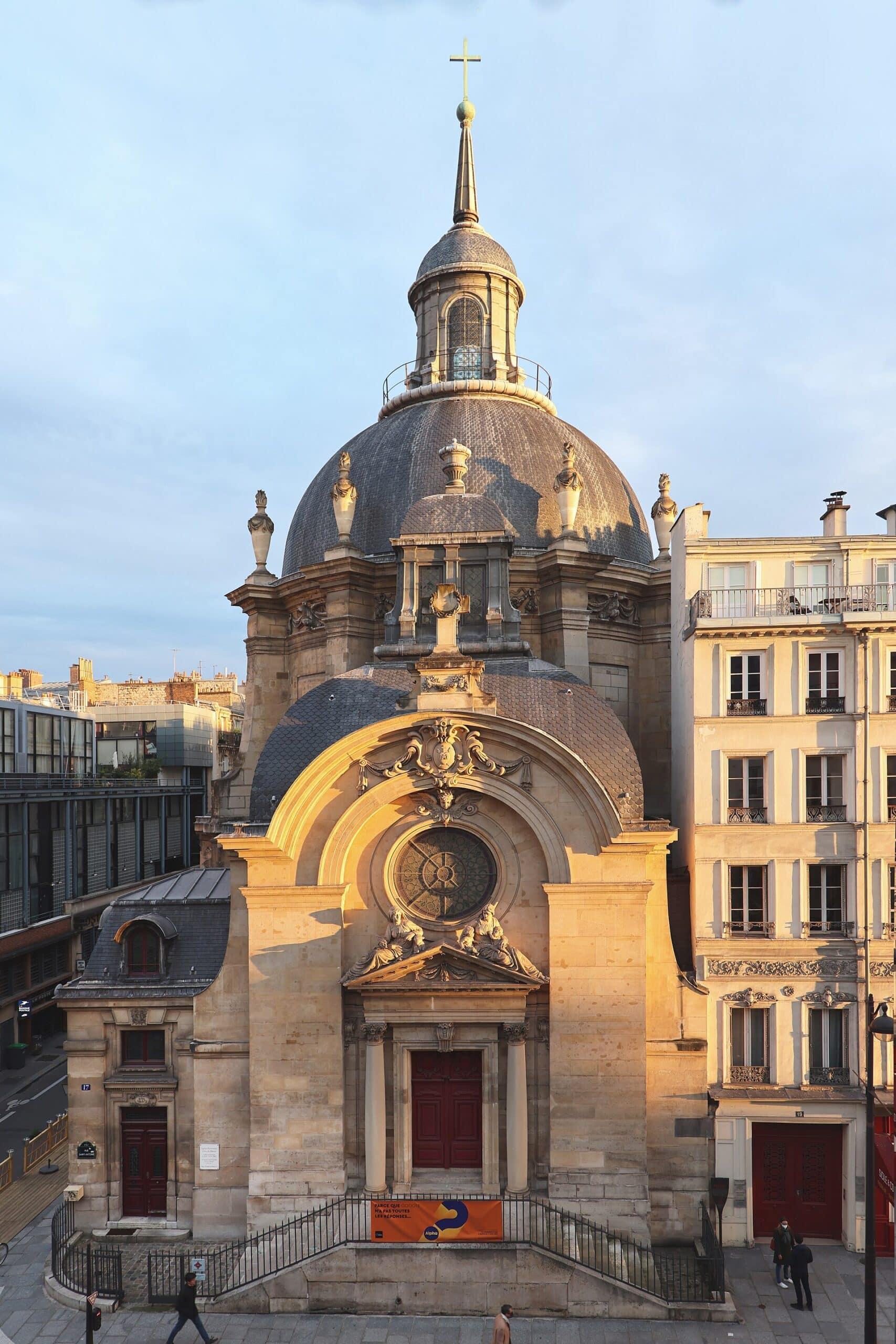
For an American group, France is less saturated than the classic Christian destinations and it carries a story that many have never heard, from Calvin to the Huguenots. Agencies can position it as a high-end alternative, built on personalization and on places few travelers know.
Many groups have already traveled with their church. France gives them a strong reason to go again, and it combines naturally with Switzerland or the United Kingdom. Our guide to Christian group tours in Europe explores these combinations.
Beyond the United States, Canada follows a similar logic. Australia, Brazil and the Asian markets are also developing, with very long flights that call for a slower start.
Grand Tour of the Shrines of France · 14 days · our signature tour, the greatest shrines of France.
The Protestant Reformation in France · 15 days · the story of French Protestants and freedom of conscience.
The Sacred Wonders of France · 15 days · cathedrals, abbeys and masterpieces of sacred art.
For the level of service, discover our exceptional addresses: Hotels, Gastronomy and Art of Living.
For travel agencies: selling France to American clients
Length. Eight to fifteen days for most groups.
Budget. As a guide, from around €2,500 per person for a simple ground program, and often more than €5,000 for a long premium journey, excluding flights.
Timing. Twelve to eighteen months ahead. See also our 3 trends for 2027.
Accommodation. Four and five-star hotels chosen for their location.
Optional extras. A private dinner cruise, a videographer, luggage carried to the rooms, a regional gift on arrival.
On our side. The full ground program, under your brand, with guides and tour leaders who speak English, Spanish, Portuguese, Italian, German, Dutch, Indonesian, Vietnamese, Korean or Chinese (mainly in major cities).
Frequently asked questions about the U.S. religious travel market
What budget should we expect for a premium Christian group trip to France?
As a guide, from around €2,500 per person for a simple ground program, and often more than €5,000 for a long premium journey, excluding international flights.
Why choose France rather than Italy or the Holy Land?
France offers a rich and lesser-known Christian heritage, especially for Protestant groups. It also lends itself to personalized, thematic journeys.
Is there a market for Spanish-speaking groups?
Yes. Pew Research counts large Catholic and Protestant Hispanic communities in the United States, and few operators serve them with a premium product.
What are the main risks in a premium program?
High expectations, long transfers and poor coordination between the agency and the partner in France. Careful planning and clear communication are essential.