
Le Chambon-sur-Lignon is a Protestant village on a high plateau in central France, where local people sheltered thousands of refugees during the Second World War, many of them Jews.
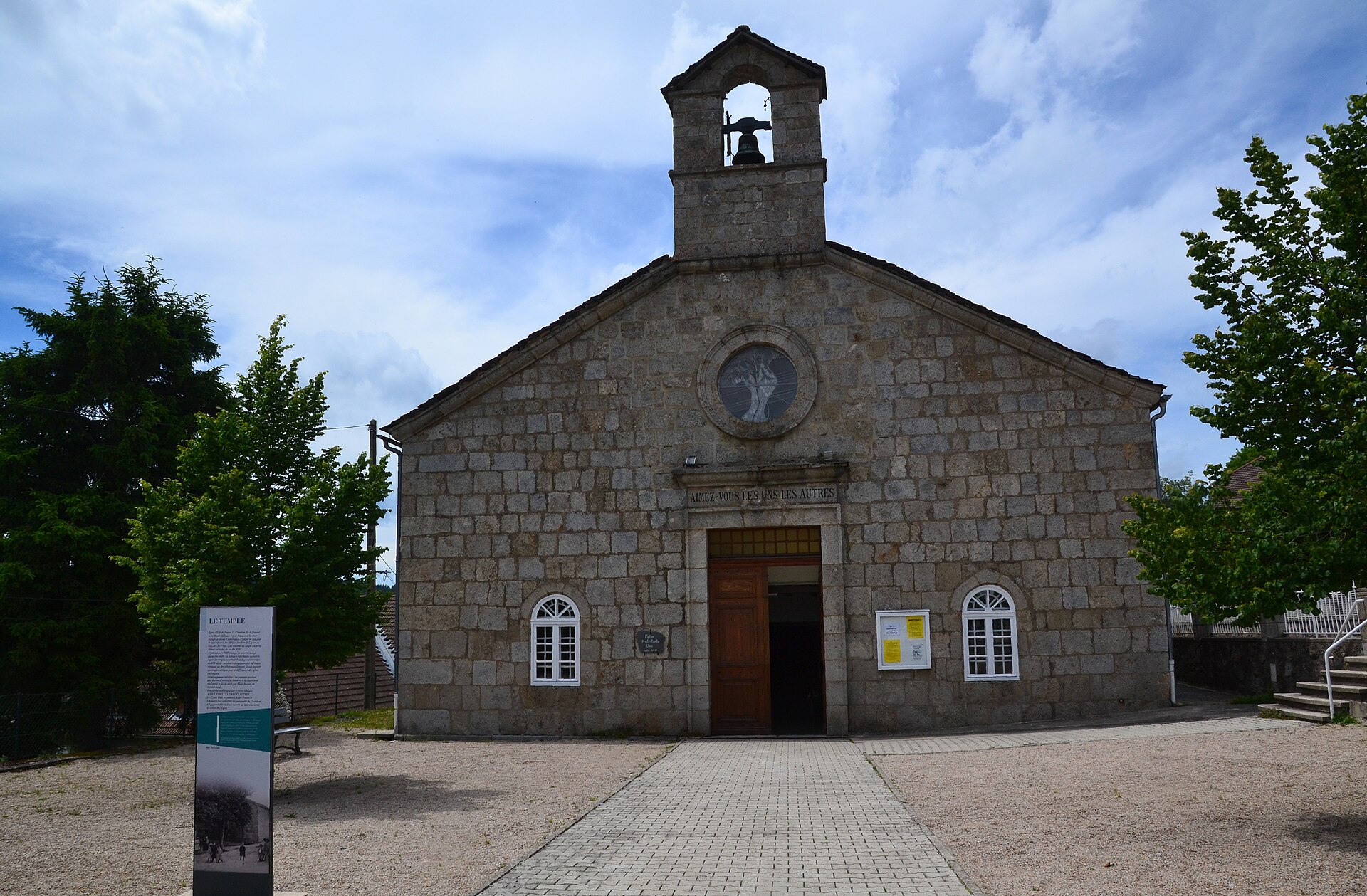
A group visit centers on the Lieu de Mémoire, open to groups all year by appointment, and on the temple, with half a day to a full day on the plateau.
What follows is aimed at travel agencies and tour operators serving evangelical and Reformed groups. We handle these visits from France, in white label.
Few places in Europe speak so directly to American Christian groups. The story is about ordinary believers who decided, together, to do what was right at a great cost.
This article is part of our complete guide to Protestant and evangelical tours in France.
What happened on the Vivarais-Lignon plateau between 1940 and 1944
According to the United States Holocaust Memorial Museum, some 5,000 people found shelter on the Plateau Vivarais-Lignon between December 1940 and September 1944, including 3,000 to 3,500 Jews.
The Reformed pastor André Trocmé, his wife Magda and his fellow pastor Édouard Theis led the moral resistance. Families, farmers, schools and boarding houses across the plateau hid people, moved them on and helped some reach Switzerland.
The cost was real. Trocmé and Theis were arrested in February 1943 and held for 28 days. In June 1943 a raid hit the school run by Daniel Trocmé, André’s cousin, who was deported and died at Majdanek in April 1944.
In 1990, Yad Vashem recognized the plateau’s communities collectively among the Righteous Among the Nations. President Jacques Chirac paid tribute to them at Le Chambon in 2004.
What a group can see on a Chambon-sur-Lignon visit
The Lieu de Mémoire. Opened in 2013, this small museum tells the story with objects, testimonies and film. It is the essential first stop.
The temple. The village’s Reformed church, with the words Aimez-vous les uns les autres (Love one another) above its entrance. A short moment of reflection here often stays with a group longer than anything else.
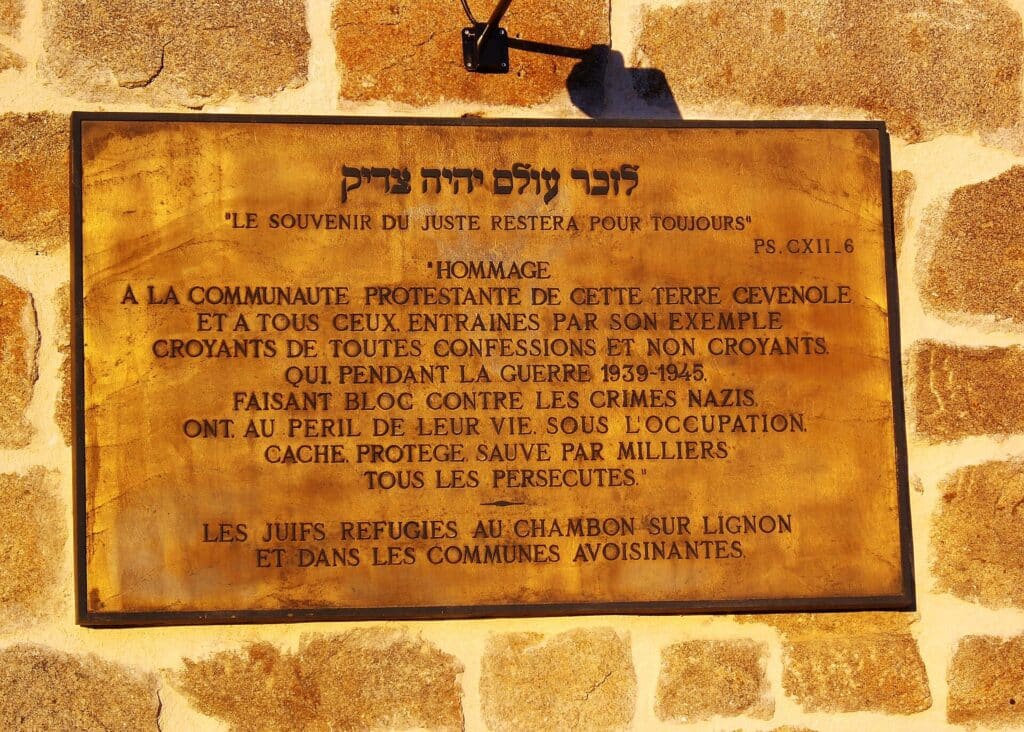
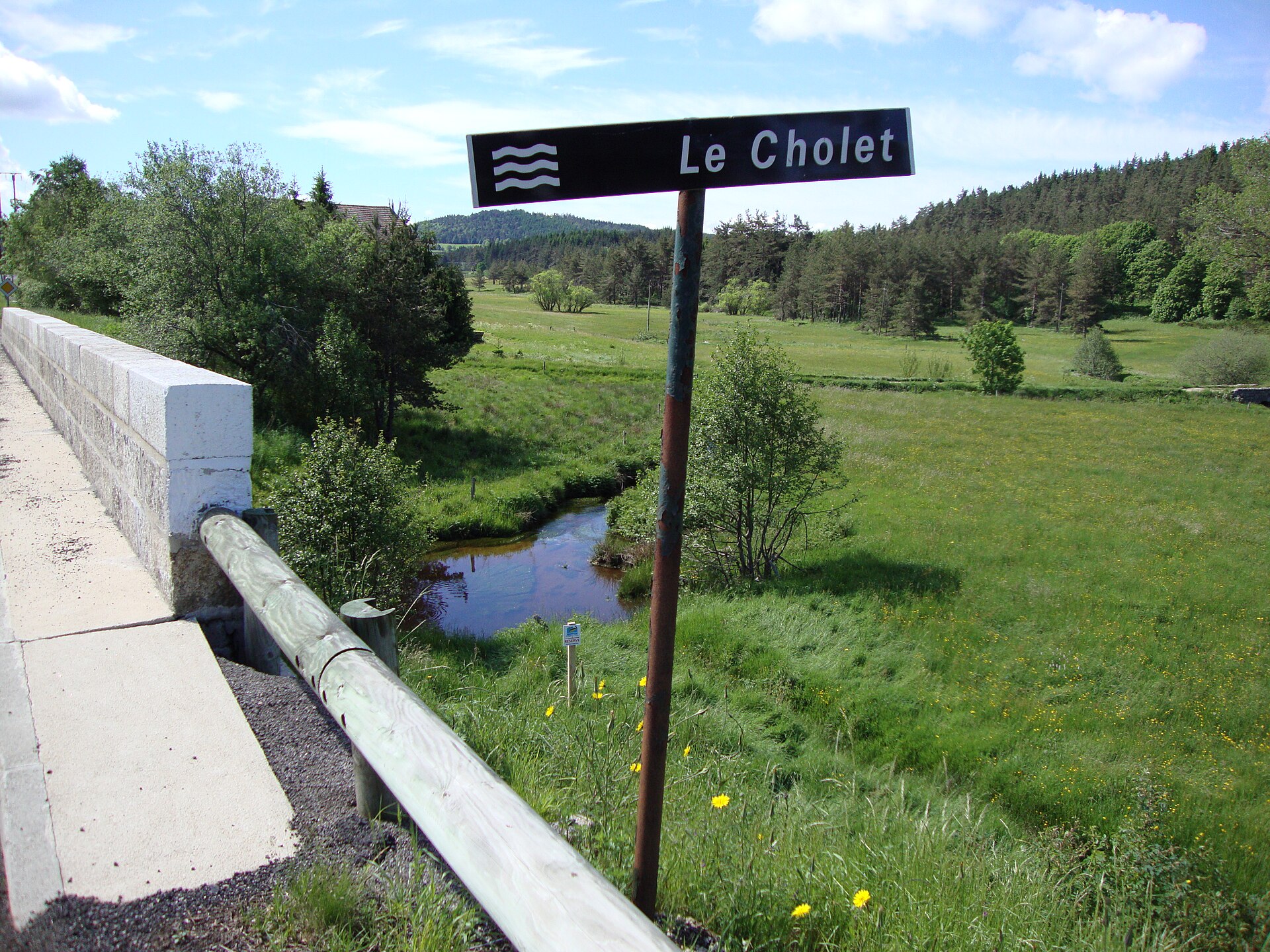
The village and the plateau. A walk through the streets, the commemorative plaque and the surrounding landscape help the group understand how such a place could hide so many people. At about 1,000 meters, the plateau feels far from everything, which was part of the story.
The Velay Express. In season, this heritage railway crosses the plateau. It gives a pleasant change of pace on a heavy subject, and it runs only on certain days.
How a group visit to the Lieu de Mémoire at Le Chambon works
The Lieu de Mémoire receives groups all year, by appointment. Groups of more than 25 are divided in two, with one half visiting while the other watches the documentary Weapons of the Spirit by Pierre Sauvage, who was born on the plateau in 1944. Each half takes 45 minutes to an hour.
| Moment | Content | Time |
|---|---|---|
| Morning | Arrival, introduction by the guide or group leader | 30 minutes |
| Late morning | Lieu de Mémoire, in two halves for a large group | 2 hours |
| Lunch | A simple regional meal, close to the village | 1 hour 30 |
| Afternoon | The temple, a time of reflection, a walk | 1 hour 30 |
The subject is heavy, and the pace should respect that. We avoid placing a long transfer or a festive dinner straight after the visit.
Getting to Le Chambon-sur-Lignon and where to lodge the group
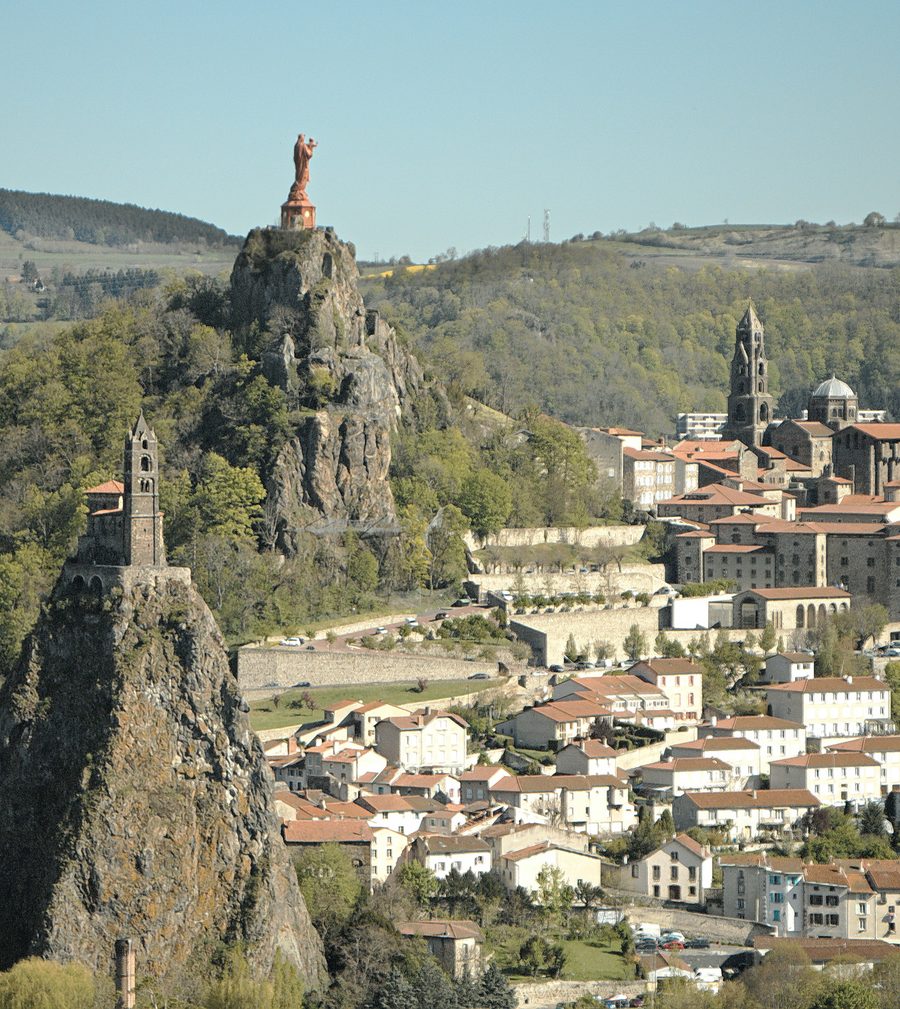
Le Chambon is not on the main routes, and that is part of its character. The plateau lies about 45 minutes by car from Le Puy-en-Velay, an hour from Saint-Étienne and just under two hours from Lyon.
Roads are narrow in places, so a coach needs more time, and we check the route in advance.
Hotel capacity on the plateau is small. For a group, we usually plan the night in Le Puy-en-Velay or Lyon, which also keeps a four-star standard.
How Le Chambon-sur-Lignon fits into a wider Protestant journey
On a Protestant journey. Le Chambon links naturally with the Huguenot story and the Cévennes, as in our guide to visiting the Cévennes and our Huguenot heritage tour. The memory of past persecution is often given as one reason the village acted as it did.
On a Reformation tour. It makes a powerful closing chapter, showing what this faith looked like four centuries after Calvin. Our John Calvin tour includes this stage between Lyon and Nîmes.
On a Christian heritage tour. It suits any group that wants to reflect on faith and courage, and the visit also works well for university groups.
The Huguenot Legacy · 13 days · the towns where the Huguenots lived and held firm.
The Protestant Reformation in France · 15 days · the story of French Protestants and freedom of conscience.
For the level of service, discover our exceptional addresses: Hotels, Gastronomy and Art of Living.
For travel agencies: a respectful visit for a demanding group
Length. Half a day to one day on site, usually within a journey of 8 to 15 days.
Best seasons. May to October. Winter conditions can be difficult on the plateau.
Accommodation. Four-star hotels in Le Puy-en-Velay or Lyon, with a private coach to the plateau.
Group moments. A time of reflection at the temple, led by the group’s own leader, and a talk prepared with the guide.
Optional extras. A journey on the Velay Express in season, a screening of the documentary before arrival, a videographer.
On our side. The booking with the Lieu de Mémoire, transport, guide and hotels. See our page on Protestant and Evangelical group programs.
Frequently asked questions about a group Chambon-sur-Lignon visit
Is the Lieu de Mémoire open to groups all year?
Yes, by appointment. Individual opening hours vary with the season, so we confirm the date with the museum.
How long should a group spend at Le Chambon?
Half a day is the minimum, and a full day gives more room for the temple and the plateau.
Can a large group visit?
Yes. Groups of more than 25 are divided in two for the museum and the film.
Is the visit suitable for young people?
Yes, with some preparation. The museum receives school groups, and we adapt the program with the group leader.
Can the group meet local people?
This is sometimes possible, and it depends on who is available. We ask for each departure and promise nothing in advance.