
Protestant Paris is a hidden city inside the famous one: the Oratoire du Louvre, the Temple du Marais, the Coligny monument, the memorial garden of Saint Bartholomew’s Day and the Latin Quarter where Calvin studied.
Two days are enough to tell the story to a group, and most sites lie within walking distance of each other.
Most groups see Paris through Notre-Dame and the Sainte-Chapelle. For a Protestant or evangelical group, the same streets carry another story, of massacre, survival and recognition.
This guide is written for travel agencies and tour operators building a Reformation or Huguenot tour. Catholic and general heritage is covered in our guide to the famous churches of Paris, and the wider journey in our Protestant itineraries in France.
This article is part of our complete guide to Protestant and evangelical tours in France.
1572: the Saint Bartholomew’s Day massacre, the root of Protestant Paris
The story of Protestant Paris turns on one night. On 24 August 1572, days after the wedding of the Protestant Henri de Navarre, the massacre began in the streets around the Louvre. Admiral Gaspard de Coligny, the Protestant leader, was killed first.
Saint-Germain-l’Auxerrois. According to the City of Paris, the bells of this church, facing the Louvre, gave the signal at around 2:30 in the morning. Since September 2022, its garden has been the Memorial Garden of Saint Bartholomew’s Day.
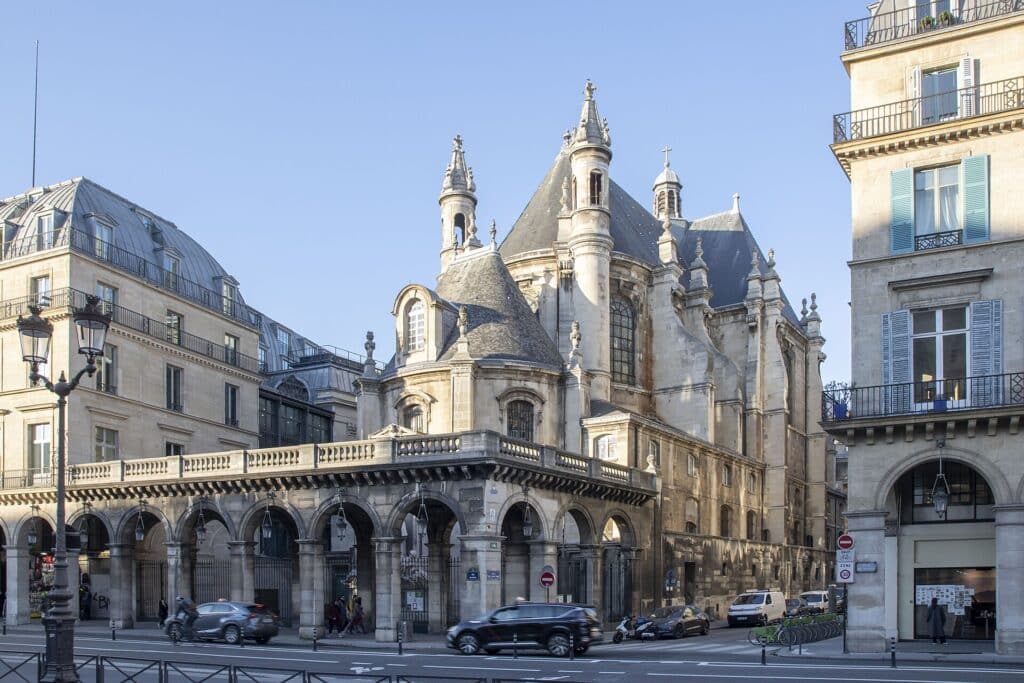
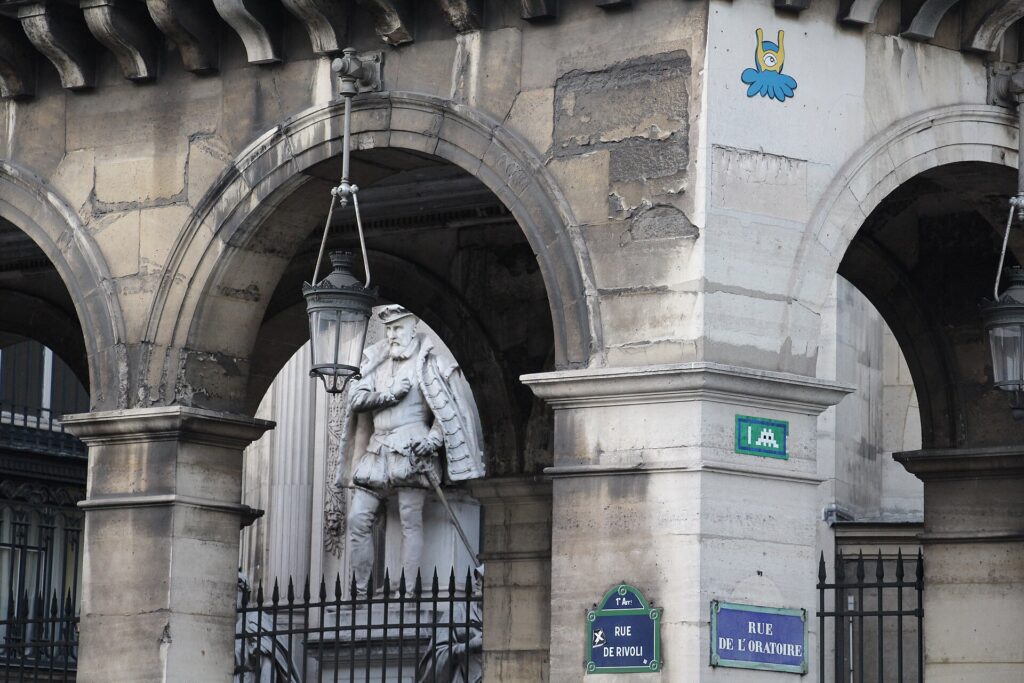
The Coligny monument. Unveiled in 1889, it stands against the apse of the Oratoire du Louvre, on the rue de Rivoli. A visit here, a few steps from the church of the tocsin, is the strongest moment of the first day.
The Oratoire du Louvre, a living Reformed parish in Protestant Paris
Built in the seventeenth century for the Oratorians, this former royal chapel was given to the Reformed Church by Napoleon in 1811. It is still a living parish, with a Sunday service at 10:30.
The church is usually open around the Sunday service, so a group visit at another time has to be arranged with the parish. American Protestants also held some of their first Paris services here, in the early nineteenth century.
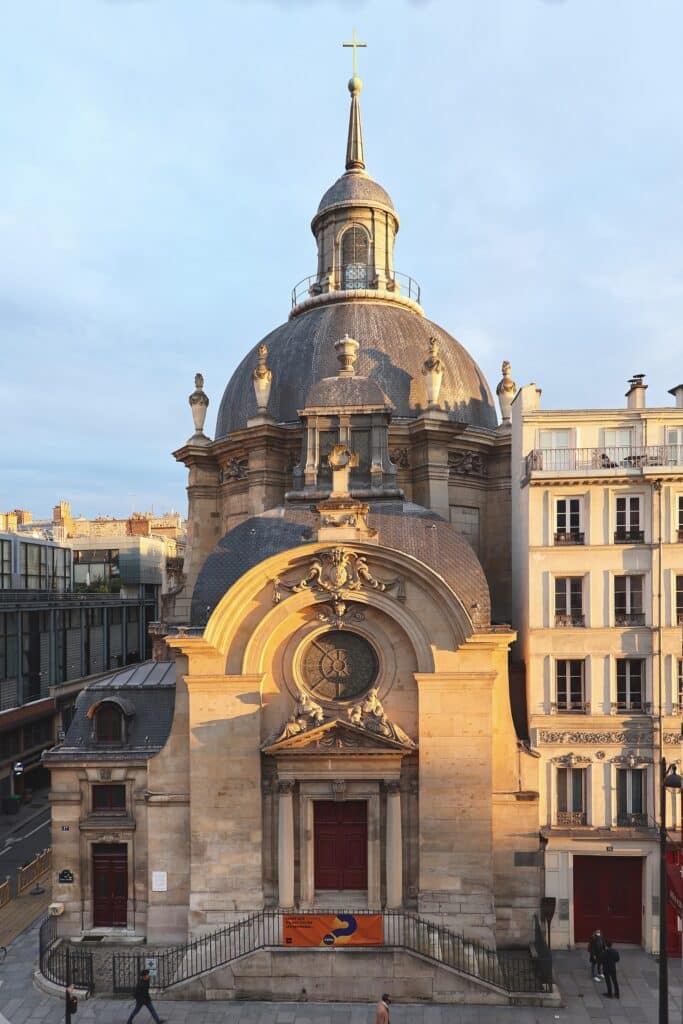
The Temple du Marais, a Mansart church that became Reformed
This round church was built by François Mansart between 1632 and 1634 for the Visitation nuns, the order founded by Saint Francis de Sales and Saint Jane de Chantal. In 1802, Bonaparte gave it to the Reformed Church.
The history makes a fine discussion for a mixed group: a Catholic convent church has now served Protestant worship for more than two centuries. Visits are arranged with the parish, and we confirm each date.
Musée Carnavalet: placing the Wars of Religion in the story of Paris
The museum of the history of Paris places the Wars of Religion within the story of the city. A guided visit focused on the sixteenth and seventeenth centuries gives the group its historical frame. Group visits must be booked.
The Latin Quarter: following Calvin as a student in Paris
Calvin arrived in Paris as a teenager and studied at the Collège de la Marche and the Collège de Montaigu. The Bibliothèque Sainte-Geneviève now stands on the site of Montaigu, next to the Panthéon. This short walk gives a Reformed group a direct link to its founder.
The Library of the Society for the History of French Protestantism, on the rue des Saints-Pères, is the great research center on the subject. It is a working library, so a group visit is exceptional and is arranged case by case.
The American Church in Paris, a natural Sunday in English
The congregation traces its roots to 1814, and its present neo-Gothic church on the Quai d’Orsay dates from 1931. For an American group, it offers a natural Sunday in English. The church organizes history tours on the second Sunday of the month between services.
Two day trips from Paris to extend the Protestant story
Noyon. Calvin’s birthplace and the Musée Jean Calvin, about an hour and a half from Paris. Our John Calvin tour starts here.
Écouen. About twenty kilometers north of Paris, the Renaissance château of Anne de Montmorency, uncle of Coligny, is now the National Museum of the Renaissance. It shows the world of the great families on both sides of the Wars of Religion.
A 2-day program in Protestant Paris for a group
| Time | Day 1: Louvre and Marais | Day 2 (Sunday): worship and the Left Bank |
|---|---|---|
| Morning | Saint-Germain-l’Auxerrois, Memorial Garden, Coligny monument | Worship at the Oratoire or the American Church |
| Lunch | Near the Palais-Royal | Quai d’Orsay or Saint-Germain-des-Prés |
| Afternoon | Temple du Marais, Musée Carnavalet | Latin Quarter, Sainte-Geneviève, the Panthéon district |
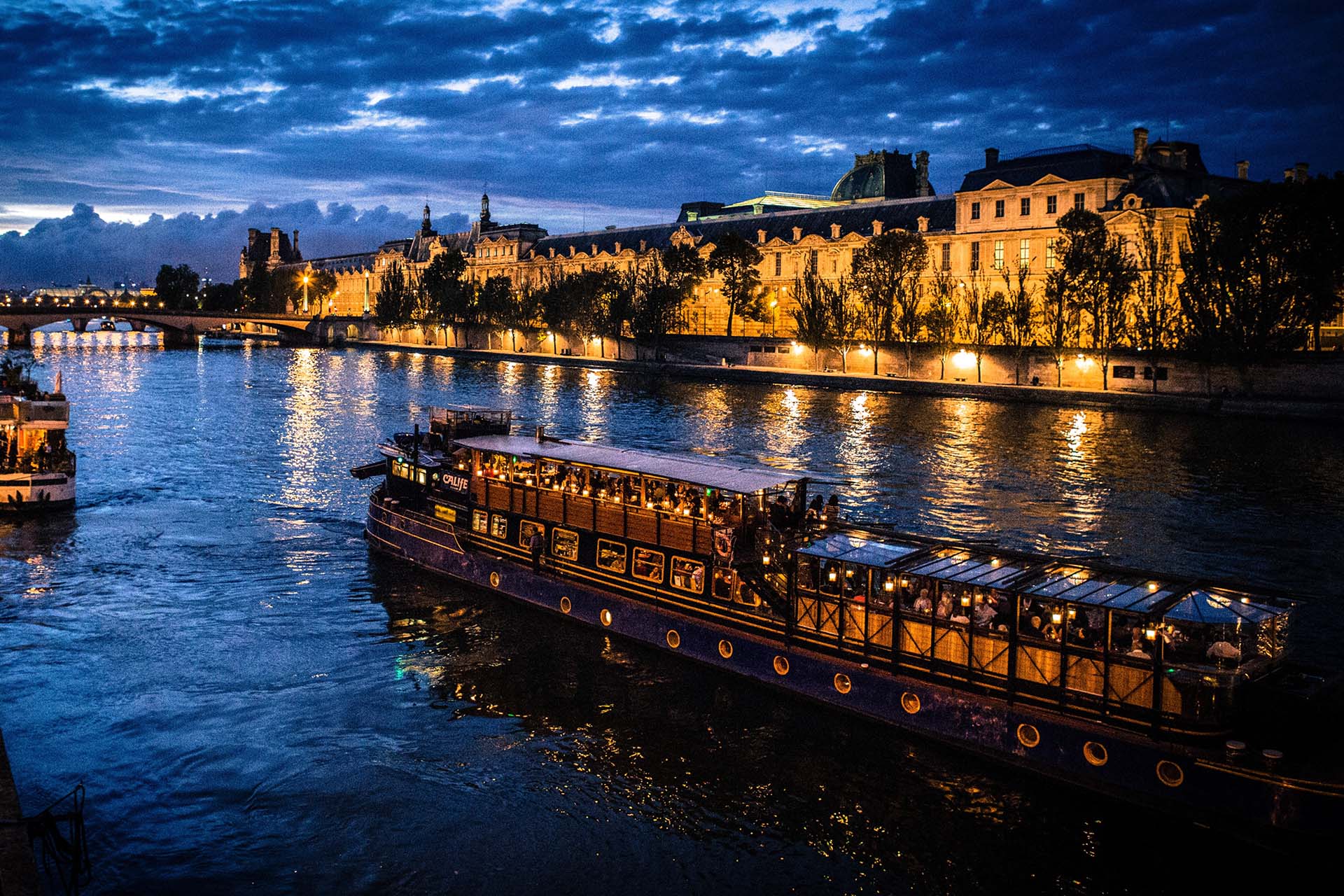
| Evening | Welcome dinner | Free evening or private cruise on the Seine |
The sites of Protestant Paris at a glance
| Site | District | Time | Group access |
|---|---|---|---|
| Saint-Germain-l’Auxerrois and Memorial Garden | Louvre | 45 minutes | Open site, discretion during services |
| Coligny monument | Rue de Rivoli | 15 minutes | Street |
| Oratoire du Louvre | Louvre | 45 minutes | Sunday service, otherwise by arrangement |
| Temple du Marais | Marais | 45 minutes | By arrangement |
| Musée Carnavalet | Marais | 1 hour 30 | Booking required |
| Latin Quarter walk | Left Bank | 1 hour 30 | Coach parking checked in advance |
| American Church | Quai d’Orsay | 1 hour | Sunday service, history tours |
The Protestant Reformation in France · 15 days · the story of French Protestants and freedom of conscience.
The Huguenot Legacy · 13 days · the towns where the Huguenots lived and held firm.
In the Footsteps of John Calvin · 11 days · the life of the reformer, from Noyon to Geneva.
For the level of service, discover our exceptional addresses: Hotels, Gastronomy and Art of Living.
For travel agencies: Protestant Paris with a demanding group
Length. Two days within a longer tour, three with Noyon or Écouen.
Best seasons. April to June and September to October. Avoid major city events, which close streets at short notice.
Accommodation. Four and five-star hotels near the Louvre, in the Marais or on the Left Bank.
À la carte. A private dinner cruise on the Seine, a guide who specializes in the Reformation, a meeting with a French pastor, luggage carried to the rooms.
Our part of the work. Licensed guides, parish contacts, museum bookings, restaurants and transport, under your brand. Continue with our Protestant Reformation in France tour, or see our Paris destination page.
Frequently asked questions about Protestant Paris for groups
How many days should a group spend on Protestant Paris?
Two days cover the main sites. A third day adds Noyon or Écouen.
Can a group attend a Protestant service in Paris?
Yes. The Oratoire du Louvre has a Sunday service in French, and the American Church in Paris worships in English. We confirm the times and let each parish know in advance.
Are the Protestant churches of Paris open to visitors?
Not always. Most open around their services, so group visits are arranged with each parish.
Can a scholar lead the visits?
Yes. A licensed guide accompanies the group where required, and the scholar can speak at the sites and in a lecture room.
Is Noyon possible as a day trip?
Yes. It takes about an hour and a half each way. We check the museum’s opening before fixing the date.
Banner photo: Moonik, CC BY-SA 3.0